
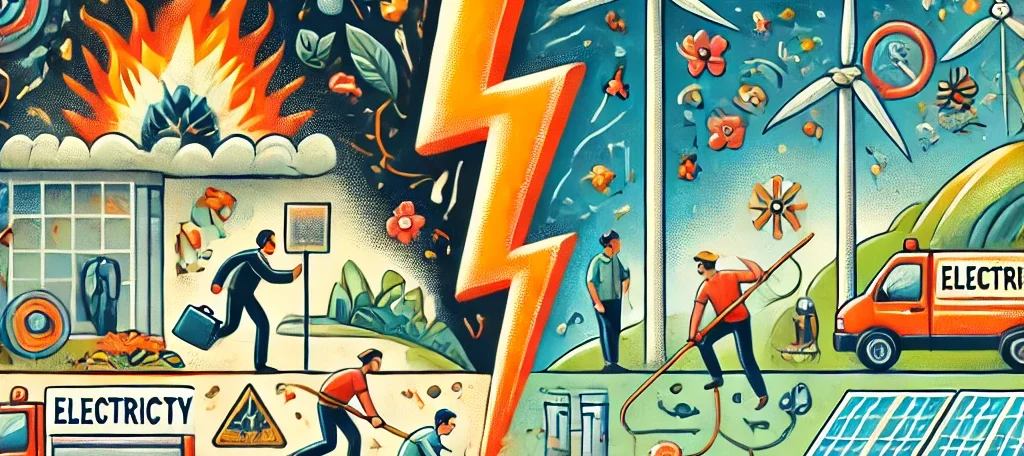
Myths & Reality of Electricity:
Electricity is an integral part of modern life, powering our homes, businesses, and industries. Despite its importance, there are numerous misconceptions and myths surrounding electricity and electrical systems. In this blog, we will debunk some of these misconceptions and clarify the truth, helping you better understand this powerful force that surrounds us.
Myth #1: Electricity Only Flows When Devices are Turned On
One of the most common misconceptions is that electricity flows through devices and appliances only when they are switched on. In reality, electricity constantly flows through electrical circuits, even when appliances are off. When a device is off, it is simply breaking the circuit, preventing the flow of electricity to the device. This standby power consumption is often referred to as “phantom” or “vampire” power and can still add to your electricity bill over time. To reduce this energy waste, consider using power strips and unplugging devices when not in use.
Myth #2: Rubber Gloves Offer Complete Protection from Electric Shock
Rubber gloves are indeed used by electricians and electrical workers as a safety precaution. However, it is crucial to understand that these gloves are not a guarantee against electric shock. Rubber gloves can provide insulation and protect against direct contact with live electrical parts, but they must be used in conjunction with other appropriate personal protective equipment (PPE) and safety practices. Additionally, the gloves must be tested and properly rated for the voltage levels they will be exposed to.
Myth #3: Birds Can Safely Sit on Power Lines Because They are Insulated
You might have seen birds perched on power lines without being electrocuted, leading to the misconception that power lines are fully insulated. In reality, power lines are not insulated; they are usually bare conductors. However, the reason birds can sit on power lines safely is because, their bodies do not provide a path for the electricity to flow to the ground. Human contact with power lines, on the other hand, can be deadly due to our conductive nature.
Myth #4: Power Outages Only Occur Due to Overloads
While overloads can cause power outages, they are not the only culprit. Power outages can result from various factors, including equipment failure, storms, fallen trees, animals coming into contact with electrical equipment, and even human error during maintenance. Utility companies work diligently to maintain reliable power supply, but occasional outages are inevitable due to these unforeseen circumstances.
Myth #5: Higher Voltage is Always More Dangerous
Voltage is a measure of electrical pressure, and it is true that higher voltages have the potential to cause more harm. However, the severity of an electric shock depends not only on voltage but also on the amount of current passing through the body and the duration of the contact. Even low voltages can be dangerous if enough current flows through the body. This is why electrical safety is critical regardless of the voltage levels involved.
Myth #6: Dimming Lights Reduces Energy Consumption Significantly
Dimming lights can save energy, but the extent of the savings depends on the type of lighting technology used. Traditional incandescent bulbs do consume less energy when dimmed, but the reduction in brightness is not proportional to the energy savings. On the other hand, energy-efficient LED bulbs can be dimmed more effectively and can result in substantial energy savings.
Myth #7: Grounding Outlets Eliminates the Need for Electrical Safety Measures
Grounding is an essential safety feature in electrical systems. It helps protect against electric shock and prevents electrical fires. However, grounding alone is not enough to ensure complete safety. Grounding protects you in the event of a fault, but it does not prevent other electrical hazards like overloads or short circuits. Proper electrical installation, circuit protection, and adherence to safety guidelines are equally important.
In conclusion, understanding the truth behind these common misconceptions is vital for promoting electrical safety and making informed decisions regarding electricity usage. Remember that electricity is a powerful force that demands respect and caution. If you have any concerns or doubts about electrical systems, always consult a qualified electrician or electrical consultant to ensure safety and efficiency in your electrical installations. Stay informed, stay safe, and appreciate the wonders of electricity responsibly.


