
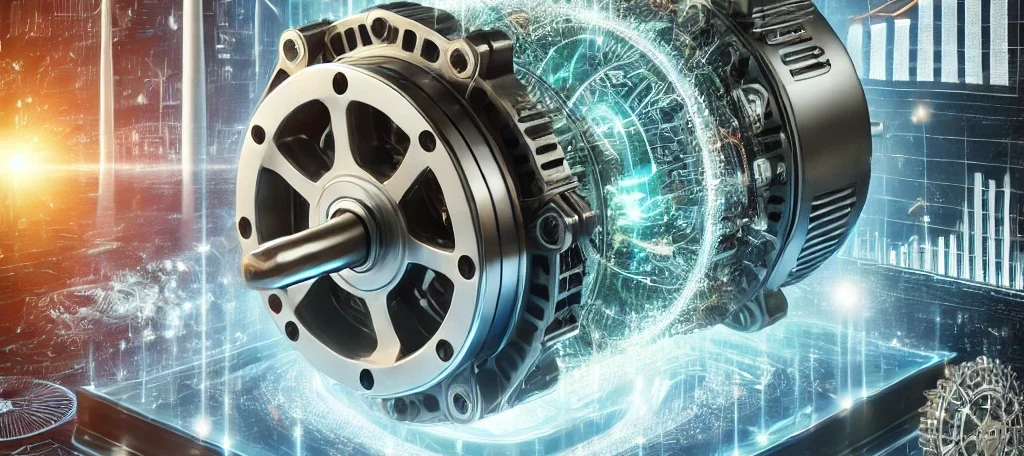
BLDC….
BLDC (Brushless DC) motors have gained significant popularity and are being increasingly used in various applications. They offer several advantages such as higher efficiency, longer lifespan, reduced maintenance requirements, and precise speed control. As technology advances and the demand for more efficient and environmentally friendly solutions increases, BLDC motors may continue to see wider adoption in the future.
BLDC motors having various advantages as below:
- BLDC motors are typically designed with a high pole count on the rotor and a low pole count on the stator, which allows for higher rotational speeds.
- The absence of brushes and the use of electronic commutation in BLDC motors enable faster and more precise control of the motor, allowing for higher RPM capabilities.
- BLDC motors are often used in applications that require high-speed rotation, such as computer cooling fans, drones, and certain industrial machinery.
- Speed Control: DC motors offer excellent speed control capabilities, allowing precise control over motor speed and torque.
- High Starting Torque: DC motors provide high starting torque, making them suitable for applications that require quick acceleration.
- Efficiency: DC motors tend to have higher efficiency compared to AC motors, especially at lower speeds.
- Reversibility: DC motors can easily change direction by reversing the direction of current flow.
- Regenerative Braking: DC motors can function as generators during braking, converting kinetic energy into electrical energy and providing regenerative braking capabilities.
In summary, AC motors are generally preferred for high-power applications where speed control is not critical, while DC motors are more suitable for applications requiring precise speed control, high starting torque, and regenerative braking capabilities.
In emerging today’s word the BLDCs are playing very crucial role.
One of the key areas where BLDC motors have found success is in electric vehicles (EVs). BLDC motors are commonly used in EVs due to their high efficiency and torque density, which help in extending the range and improving overall performance. Additionally, BLDC motors are also being adopted in other transportation systems such as electric bikes, scooters, and drones.
Furthermore, BLDC motors are being utilized in industrial automation, robotics, and home appliances. Their efficient operation and precise control make them suitable for various motion control applications, including robotics arms, CNC machines, and automated manufacturing processes.
The use of BLDC motors in HVAC systems in both residential and commercial has gained traction due to their high efficiency, which can lead to significant energy savings. Traditional HVAC systems often use AC induction motors that operate at fixed speeds and consume more power compared to BLDC motors. By employing BLDC motors in HVAC applications, the speed of the motor can be precisely controlled based on the system’s cooling or heating demands. This allows for better energy management and reduces unnecessary power consumption, resulting in increased overall system efficiency.
BLDC motors also offer other advantages in HVAC systems, such as reduced maintenance needs, quieter operation, and improved control options. These motors can be integrated with advanced control algorithms and sensors to optimize the HVAC system’s performance, resulting in better comfort and energy efficiency.
The market has indeed witnessed a growing number of HVAC products incorporating BLDC motors, including fans, pumps, and compressors. BLDC compressors, in particular, are becoming increasingly popular in air conditioning and refrigeration systems due to their superior energy efficiency and precise control capabilities.
The adoption of BLDC technology in HVAC is driven by the need for energy-efficient and environmentally friendly solutions. Governments and organizations worldwide are emphasizing energy conservation and reducing carbon emissions, leading to stricter regulations and incentives for energy-efficient HVAC systems. As a result, the demand for BLDC-based HVAC products is expected to continue growing.
The adoption of BLDC motors in HVAC systems can contribute to significant power consumption reductions due to their near unity efficiency and precise control capabilities. The increasing availability of BLDC-based HVAC products in the market reflects the industry’s recognition of the benefits offered by this technology in terms of energy savings and improved system performance.
The future of BLDC motors looks promising as the demand for electrically driven systems continues to grow. Ongoing advancements in motor design, control algorithms, and power electronics are further improving the efficiency, power density, and reliability of BLDC motors. Additionally, the increasing focus on renewable energy sources like wind and solar power has created opportunities for BLDC motors in applications such as wind turbines and solar tracking systems.
In conclusion, while BLDC motors have a promising future and are being increasingly adopted in various industries, the landscape of motor technologies is diverse, and different applications may benefit from different motor types based on their specific needs.
However, as a disclaimer, BLDC motors will not completely replace all other types of motors in every application. Instead, it is more likely that BLDC motors will continue to see increased usage in certain areas where their specific advantages are valued, while other types of motors such as AC induction motors, Synchronous Motor, Stepper Motor, Servo Motor…etc are well-established and widely used in many industrial applications and will still have their own niche applications based on their unique capabilities. The choice of motor type will depend on factors such as the specific requirements of the application, cost considerations, efficiency needs, and control requirements.
To start with, towards reducing the energy consumption, many startup companies are promoting conversion kits to upgrade existing ceiling fans to BLDC technology. Upgrading traditional ceiling fans with BLDC motors can indeed lead to significant energy savings. Similarly, the availability of BLDC-based products such as refrigerators, cold storages, and split air conditioners in the Indian market is a positive development. These appliances, which are known for their significant power consumption, can benefit greatly from the energy efficiency of BLDC technology. By using BLDC compressors and motors, these appliances can achieve better performance and reduced energy consumption.
If there are specific details or information you would like to provide regarding the availability, features, or benefits of BLDC products in market, please feel free to share them. I’ll be happy to provide further insights or answer any specific questions you may have.


